

Explore our tailored British Curriculum, and how we made it effective to our children.
Keeping every children safe – everywhere
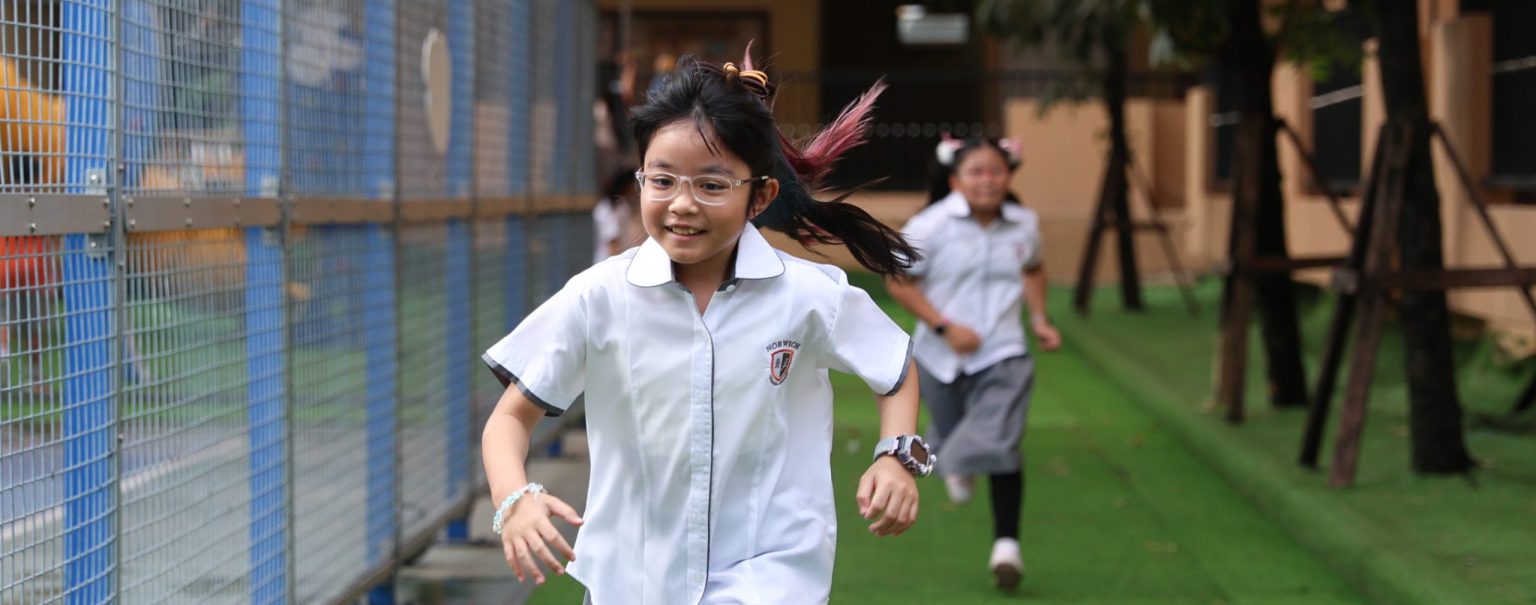
Norwich is a school fully committed to fulfilling its responsibilities in safeguarding students and keeping every child safe – everywhere.
This policy is designed in keeping with the Vision where we value both ethical responsibility and educational success, the Mission where our goal will always be to foster, in our pupils, the wish to be tolerant, content and responsible members of society.
Note: Full information regarding Child Protection & Safeguarding can be found in the Child Protection & Safeguarding Policy.
Child Protection – is the process of protecting students identified as either suffering, or likely to suffer, significant harm as a result of physical, sexual, or emotional abuse or neglect.
Safeguarding – involves the measures and structures put in place by the school which are designed to prevent and respond to abuse and/or neglect.
Every member of staff of Norwich International School must know that they have a duty to be aware of the possibilities of child abuse.
If any member of staff has the slightest suspicion that a member of the School is at risk of abuse, they should immediately inform the relevant Child Protection Officer.
Listen to the child in a calm, sympathetic way. Allow the child to tell their story in their words. Promise discretion but not confidentiality.
Respond by confirming your understanding of the situation. Explain what you will do next. Reassure the child you will do your best to help. Acknowledge their courage in talking to you. Refer the situation immediately to the appropriate Child Protection Officer if the child is at imminent risk.
Record as much detail as possible on a Child Protection Issue Form.
Report in person with a hard copy of the form to the Child Protection Officer within 24 hours, or immediately if risk is imminent. Do not discuss the matter with anyone else or take any further action. Your duty to report ends at this point. In cases of any doubt, confusion or concern requiring support due to inaccessibility, urgency or perceived conflict of interest, the Head of School should be then approached.
Strategic Safeguarding Lead (SSL)
The Head of School is the Strategic Safeguarding Lead.
Child Protection Officers and Designated Safeguarding Leads
Governor responsible for Child Protection
Managing Director
The nominated Governor for Child Protection is the Managing Director.
If a member of staff reporting suspicions remains unsatisfied by a decision not to act by the Head of School (SSL) or a DSL/CPO, he or she may report concerns directly to the Governor responsible for Child Protection.
He or she will be considered to have acted as a responsible citizen and will not be held accountable for undermining a school decision.
All staff should be aware of their duty to raise concerns, where they exist, about the management of Child Protection, which may include the attitude or actions of colleagues.
The safeguarding responsibility includes a duty to treat all children equally and offer the same right to safety to all.
This encompasses these principles:
The Five Duties in a Serious Abuse Crisis
The school provides a safe, positive, supportive and stimulating environment which promotes the social, physical, psychological and moral development of the individual child.
The school will:
Safeguarding also includes:
Abuse and neglect are described in four categories, as defined in the Department of Health’s document ‘Working Together to Safeguard Children, 2018’.
There are 4 categories of abuse:
Children will be registered on the Child Protection Register if they are deemed to be at risk.
Children will be closely monitored for attendance and changes in patterns of behaviour.
Although these signs do not necessarily indicate that a child has been abused, they may help adults recognise that something is wrong.
The possibility of abuse should be investigated if a child shows a number of these symptoms, or any of them to a marked degree.
The signs below may indicate a child in distress and should always be taken seriously:
Physical abuse is defined as: The threat or the use of force which results in pain or injury or a change in the person’s physical health.
OR
The non-accidental infliction of physical force that results in bodily injury, pain or impairment.
Physical abuse may involve: hitting, shaking, throwing, poisoning, burning or scalding, drowning, suffocating, or otherwise causing physical harm to a child.
Physical harm may also be caused when a parent or carer fabricates the symptoms of, or deliberately causes illness in a child.
Signs to look for
Emotional abuse is defined as: The willful infliction of mental suffering by others.
Emotional abuse is the persistent emotional maltreatment of a child such as to cause severe and persistent adverse effects on the child’s emotional development.
It may involve conveying to children that they are worthless or unloved, inadequate, or valued only insofar as they meet the needs of another person.
It may feature age or developmentally inappropriate expectations being imposed on children.
These may include interactions that are beyond the child’s developmental capability, as well as overprotection and limitation of exploration and learning, or preventing the child participating in normal social interaction.
It may involve seeing or hearing the ill-treatment of another.
It may involve causing children frequently to feel frightened or in danger, or the exploitation or corruption of children.
Emotional, mental or verbal abuse also includes:
Signs to look for
Sexual Abuse is defined as:
This is when a vulnerable person has been involved in a sexual activity or relationship which they did not want, have not consented to or consented to under false pretences.
OR
They did not have capacity or understanding to allow them to have consented.
OR
Is against the law.
Sexual abuse involves forcing or enticing a child or young person to take part in sexual activities, including prostitution, whether or not the child is aware of what is happening.
The activities may involve physical contact, including penetrative (e.g. rape, buggery or oral sex) or non-penetrative acts.
They may include non-contact activities, such as involving children in looking at, or in the production of, pornographic material or watching sexual activities, or encouraging children to behave in sexually inappropriate ways.
Contact – inappropriate touch anywhere, masturbation, part penetration or attempted penetration of the vagina, anus, mouth with penis, finger or other object.
Non-contact – inappropriate looking, photography, indecent exposure, serious teasing or innuendo, pornography, harassment, enforced witnessing of sexual acts or media.
Signs to look for
Neglect is the persistent failure to meet a child’s basic physical and/or psychological needs, likely to result in the serious impairment of the child’s health or development.
Neglect may occur in pregnancy as a result of maternal substance abuse.
Once a child is born, neglect may involve a parent or carer failing to provide adequate food and clothing, shelter, failing to protect a child from physical and emotional harm or danger, failure to ensure adequate supervision or the failure to ensure access to appropriate medical care or treatment.
It may also include neglect of, or unresponsiveness to, a child’s basic emotional needs.
Signs to look for
Peer-on-Peer Abuse
All staff should be aware that safeguarding issues can manifest themselves via peer on peer abuse.
Children are capable of abusing their peers.
This is most likely to include, but may not be limited to, bullying (including cyber bullying), gender based violence/sexual assault, sexting and involvement in gang culture.
Allegations of peer on peer abuse will be investigated in line with other school policies and additional pastoral support will be put in place when required.
Peer on Peer abuse should never be tolerated and is not “banter” or “part of growing up”.
Child Sexual Exploitation
Child Sexual Exploitation (CSE) is a form of sexual abuse.
It occurs where an individual or group takes advantage of an imbalance of power or status to coerce, manipulate or deceive a child or young person under the age of 18 into sexual activity:
(a) in exchange for something the victim needs or wants, and/or
(b) for the financial advantage satisfaction or increased status of the perpetrator or facilitator.
The victim may have been sexually exploited even if sexual activity appears consensual.
Child sexual exploitation does not always involve physical contact; it can also occur through the use of technology.
Radicalisation
Protecting children from the risk of radicalisation should be seen as part of schools’ wider safeguarding duties, and is similar in nature to protecting children from other forms of harm and abuse.
During the process of radicalisation, it is possible to intervene to prevent vulnerable people being radicalised.
Radicalisation refers to the process by which a person comes to support terrorism and forms of extremism.
There is no single way of identifying an individual who is likely to be susceptible to an extremist ideology.
It can happen in many different ways and settings.
Specific background factors may contribute to vulnerability which are often combined with specific influences such as family, friends or online, and with specific needs for which an extremist or terrorist group may appear to provide an answer.
The internet and the use of social media in particular has become a major factor in the radicalisation of young people.
As with managing other safeguarding risks, staff should be alert to changes in children’s behaviour which could indicate that they may be in need of help or protection.
School staff should use their professional judgement in identifying children who might be at risk of radicalisation and act proportionately.
Female Genital Mutilation (FGM)
Female Genital Mutilation comprises all procedures involving partial or total removal of the external female genitalia or other injury to the female genital organs.
It is illegal in the UK and a form of child abuse with long-lasting harmful consequences.
Professionals in all agencies, and individuals and groups in relevant communities, need to be alert to the possibility of a girl being at risk of FGM, or already having suffered FGM.
Guidance on Sexting
Details of how to respond to incidents of sexting can be found in the school’s safeguarding guidance.
Academic staff should consciously engage in active listening and cultivate an understanding attitude with children.
It is important to draw a distinction between complaints and allegations against staff. In other words, the difference between behaviours that suggest misconduct or unprofessionalism, and those which specifically raise child protection concerns.
An allegation should be made if a teacher or other member of staff has:
If an allegation is made against a teacher or member of staff, then the quick resolution of that allegation will be a clear priority as this is a benefit to all concerned.
Any unnecessary delays should be eradicated.
If an allegation is made against a member of staff it must be responded to immediately and with the utmost discretion to ensure protection for the child and support for the person who is the subject of the allegation.
The informant should be told that the matter will be referred in confidence to the appropriate people.
If an allegation concerns the Head of School, the person receiving the allegation will immediately inform the Managing Director, as the Governor with responsibility for Child Protection.
If an allegation concerns a DSL/Child Protection Officer, then the Head of School must be informed.
ChildLine Thailand
1387
ChildLine Thailand offers a free, 24 hour phone service in Thai for any child who wants confidential advice (Thai language only).
The Samaritans
02 713 6793
Thai Police Safeguarding Unit / The Centre for the Protection of Children’s Rights Foundation (CPCR)
02-4121196
Thailand Internet Crimes Against Children Task Force
http://ticac.police.go.th/
British Embassy
02-3058333
US Embassy
02-2054000
Chinese Embassy
02-2450088
Embassy of the Philippines
02-2590139
Norwich International School accepts its responsibility for safeguarding students and keeping every child safe.
The school is committed to maintaining an environment where students feel secure, are encouraged to talk and are listened to, and where children know that there are adults in the school whom they can approach if they are worried.
The school provides a safe, positive, supportive and stimulating environment which promotes the social, physical, psychological and moral development of the individual child.
The safeguarding responsibility includes a duty to treat all children equally and offer the same right to safety to all.